Avéli is an advanced, FDA-cleared technology designed to treat cellulite in the thighs and buttocks by directly targeting the underlying cause of cellulite. Unlike traditional cellulite treatments that focus on improving skin quality, Avéli works by releasing the fibrous septae that pull the skin downward and create the characteristic “orange peel” appearance of cellulite.
How Does Avéli Work?
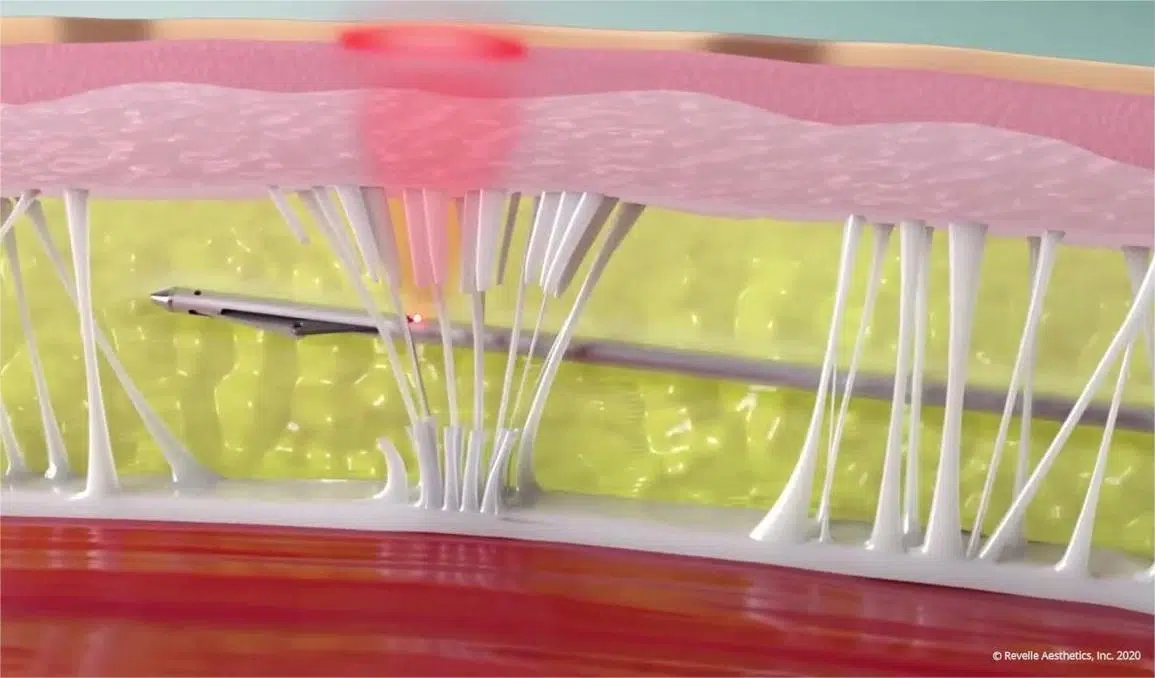
Avéli is an innovative cellulite treatment that works differently from previous technologies. It directly targets the fibrous bands that connect the skin to deeper tissues. By carefully releasing these fibrous structures, the skin is freed from downward tension, leading to a smoother surface and improved skin texture.
The device features a specialized hook that precisely cuts the fibrous septae beneath the skin. These fibrous bands are responsible for pulling the skin downward, causing fat cells to push upward and form visible dimples. Avéli also includes a built-in illumination system that allows the physician to clearly visualize the treatment area and work at the correct depth with high accuracy.
Key Benefits of Avéli Cellulite Treatment
- FDA-cleared and clinically proven.
- Performed under local anesthesia.
- Single treatment session with immediate discharge.
- Long-lasting and real results.
- Suitable for all skin tones, including light and dark skin.
- In-office procedure without the need for an operating room.
- Effective for mild, moderate, and severe cellulite.
- Targets cellulite without damaging surrounding tissues.
- Highly precise, allowing confirmation of the affected fibrous bands before release.
- Can be combined with body contouring and skin-tightening treatments for optimal results.
How the Procedure Is Performed
The Avéli procedure typically takes about one hour. The physician first marks the cellulite areas while the patient is standing and at rest, as fibrous bands may not be visible when lying down. The treatment area is then disinfected, and local anesthesia is administered using fine needles.
A very small incision (approximately 3 mm or less) is made, through which the Avéli device is gently inserted beneath the skin. The integrated hook identifies and releases the fibrous bands responsible for skin dimpling. Once all targeted bands in the area are treated, the physician moves on to the next region if needed.
The procedure can be summarized in three main steps:
- Inserting the Avéli device under the skin in the pre-marked treatment areas.
- Precisely targeting the fibrous septae without affecting surrounding tissues.
- Releasing the fibrous bands at the appropriate time to achieve smoother skin immediately after the procedure.
When Do Results Appear?
Results may vary from person to person. In general, improvement can be noticed immediately after the procedure, with more visible results once swelling and bruising subside within 2 to 4 weeks. Final results typically appear after approximately 3 months and can last for a year or longer.
To maintain and enhance results, your physician may recommend complementary treatments such as collagen-stimulating injections, body tightening procedures, or cellulite treatments like EMTONE, ATTIVA, or microneedling.
Who Is a Good Candidate for Avéli?
- Women aged between 21 and 55 years.
- Individuals with cellulite caused by fibrous skin tethering rather than excess fat.
- Those seeking a long-term solution without multiple treatment sessions.
- Not suitable for patients with severe skin laxity.
- Not recommended for individuals with significant weight gain or obesity.
Before the Procedure
- Discontinue blood-thinning medications after consulting your physician.
- Stay well hydrated to support lymphatic drainage.
- Stop smoking to reduce bleeding and promote proper healing.
After the Procedure
- Wear compression garments for approximately two weeks.
- Avoid strenuous physical activity for 1–2 weeks.
- Over-the-counter pain relievers may be used if needed.
- Mild tenderness may occur; some patients find sleeping on their stomach more comfortable.
- A small amount of clear or pinkish fluid may be noticed at the incision site.
Possible Side Effects and Limitations
- Temporary bruising, swelling, and redness at the treatment sites.
- Risk of infection or wound inflammation (rare).
- Mild numbness that typically resolves without treatment.
- In complex cellulite cases, not all fibrous bands may be released, depending on anatomy and physician expertise.
- Avéli treats cellulite specifically and does not address associated issues such as skin laxity or thinning, which may require additional treatments.
How Is Avéli Different from Other Cellulite Treatments?
While many cellulite treatments focus on improving skin quality and stimulating collagen, Avéli directly addresses the root cause of cellulite by releasing the fibrous septae that tether the skin. This results in a smoother, more even skin surface.
Avéli offers exceptional precision by targeting only the affected fibrous bands without damaging healthy structures. Although it is not the only technology that releases fibrous septae, it is considered one of the most accurate.
Avéli treats cellulite caused by fibrous tethering but does not address fat pockets or significant skin laxity. For optimal results, it may be combined with other treatments such as Emsculpt Neo for fat reduction and muscle building, or Exilis for skin tightening and cellulite associated with fat accumulation.
Is the Avéli Procedure Painful?
Avéli is performed under local anesthesia and is considered minimally invasive and comfortable. Some patients may experience mild discomfort after the anesthesia wears off, typically lasting one day. Pain levels are often reported as mild (around 4 out of 10).
Is There Any Downtime?
Avéli is a non-surgical, in-office procedure performed under local anesthesia. Patients can leave the clinic immediately and typically return to normal daily activities without the need for extended downtime.
Follow-Up Visits
Patients are usually examined one week after the procedure, followed by a visit at six weeks. Additional follow-ups may be scheduled at three and six months to monitor results and progress.