Many people confuse the concept of skin tightening with skin lifting, assuming the two terms refer to the same outcome. In reality, there is a clear medical distinction between them in terms of mechanism of action, depth of impact, and the type of improvement expected. This misunderstanding can sometimes lead to selecting an unsuitable aesthetic procedure and, consequently, achieving results that fall short of expectations.
In some cases, a patient may expect a visible lifting effect from a treatment that primarily improves skin quality. In other situations, someone may choose a deep structural technique when the concern is actually superficial and could be addressed with a simpler, more appropriate treatment. Understanding the difference between tightening and lifting plays a fundamental role in making the correct treatment decision.
What Do We Mean by Skin Tightening vs. Skin Lifting?
Skin Tightening
Skin tightening refers to aesthetic treatments and technologies designed to improve skin firmness and quality by stimulating collagen and elastin production within the dermis. These treatments do not reposition tissues. Instead, they enhance skin elasticity, firmness, and texture gradually over time.
Results are typically progressive and depend on the body’s natural regenerative response. In essence, skin tightening improves skin quality, not tissue position.
Skin Lifting
Skin lifting, on the other hand, focuses on improving tissue positioning and structural support rather than just surface quality. In these cases, the primary concern lies in deeper tissue laxity — such as subcutaneous layers or structural support systems affecting facial or body contour.
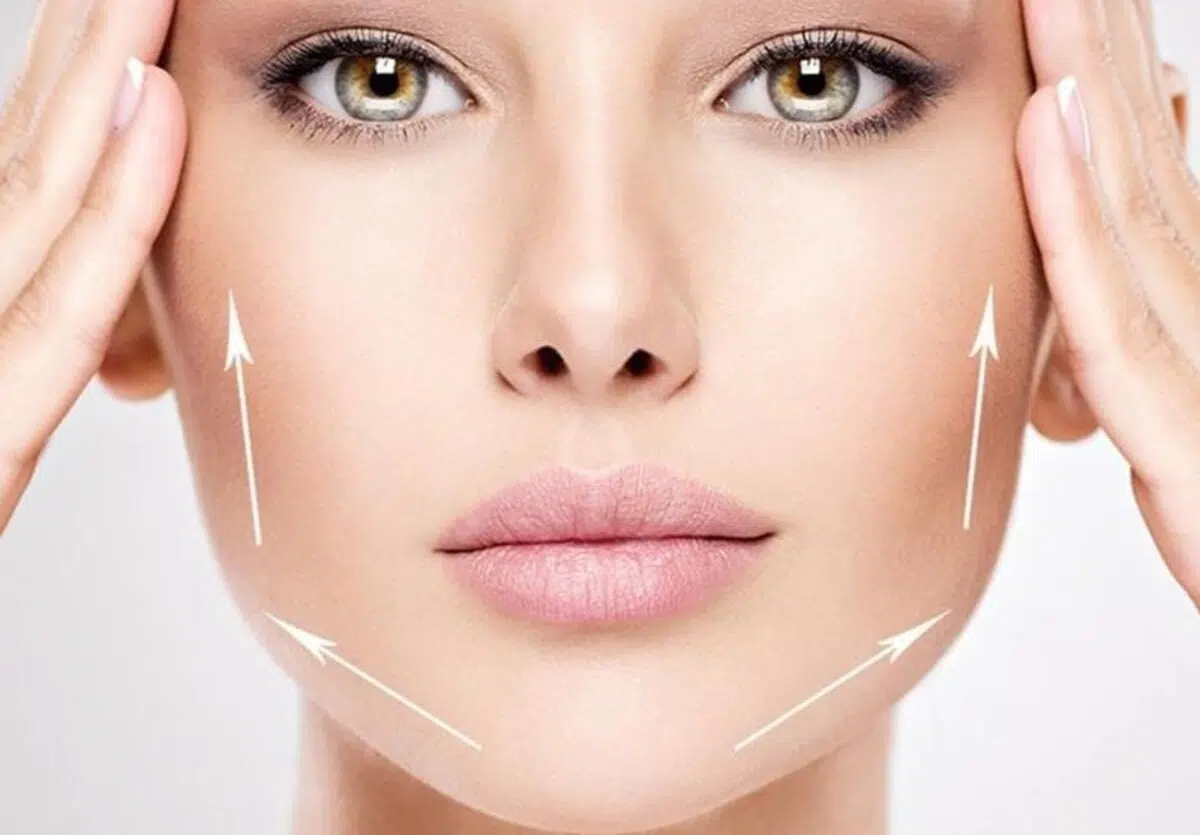
Lifting technologies target deeper anatomical layers and concentrate on redefining contours, enhancing jawline definition, improving mid-face positioning, and restoring structural balance — rather than solely improving skin texture.
In short:
- Skin tightening improves skin quality.
- Skin lifting improves structural contour and tissue positioning.
Although both aim to enhance appearance, the difference is medically significant and directly influences procedure selection and outcome expectations.
Difference in Target Depth: Dermis vs. Deeper Structural Layers
Skin tightening treatments primarily target the dermis, the layer responsible for firmness and elasticity. When energy-based devices or biostimulatory treatments focus on this layer, the result is improved texture, mild tightening, and reduction of superficial wrinkles — without significant repositioning of tissues.
Therefore, skin tightening is ideal in cases of:
- Mild laxity
- Early collagen depletion
- Skin fatigue without contour loss
In contrast, skin lifting procedures target deeper layers such as the subdermal tissues and SMAS (Superficial Musculoaponeurotic System) — the structural support network of the face.
When tissue descent originates from these deeper layers, dermal stimulation alone is insufficient. Structural lifting techniques work by tightening and supporting these foundational layers, resulting in improved contour definition of the jawline, cheeks, and neck — outcomes that cannot be achieved through superficial tightening alone.
When Is Skin Tightening Sufficient?
Skin tightening may be appropriate when:
- Laxity is mild without significant contour loss
- Jawline and cheek structure remain well defined
- Fine lines and superficial wrinkles are present
- The skin appears fatigued rather than structurally sagging
In such cases, dermal collagen stimulation is typically sufficient to improve overall firmness and texture without targeting deeper support structures.
When Is Lifting the Better Option?
Lifting becomes more suitable when there is:
- Noticeable loss of jawline definition
- Lower face sagging
- Mid-face descent or cheek drooping
- Neck laxity with acceptable skin texture
- A visible sense that tissues have “shifted downward”
In these scenarios, tightening alone will not produce a satisfactory outcome. The underlying issue requires deeper structural support rather than surface-level enhancement.
How Are Aesthetic Technologies Classified Between Tightening and Lifting?
Not all non-surgical aesthetic treatments work in the same way. It is essential to distinguish between technologies that primarily tighten the skin and those that provide lifting effects — as well as hybrid technologies that combine both.
Collagen-Stimulating Injectables
Biostimulatory injectables such as Sculptra, BB Serum injections, and polynucleotide-based treatments are classified under skin tightening. They stimulate collagen production within or near the dermis, improving elasticity and overall skin quality.
These treatments do not reposition tissues or reshape facial contours. Instead, they provide gradual improvement in firmness and radiance, making them ideal for mild laxity or compromised skin quality.
Radiofrequency-Based Tightening
Surface-based radiofrequency devices such as Thermage FLX also fall under skin tightening. Their effect centers on collagen remodeling and improved skin firmness.
While they may create a sensation of tightening and deeper collagen stimulation, they do not provide true structural lifting of deep tissue layers.
Internal Non-Surgical Lifting Technologies
Technologies such as Endolift and ATTIVA are considered intermediate solutions between tightening and lifting.
They work internally to improve skin firmness while exerting a more noticeable effect on deeper tissues compared to surface treatments. These are suitable for mild to moderate laxity but are not replacements for full surgical lifting.
Focused Ultrasound Lifting
High-intensity focused ultrasound treatments such as Ultherapy lean more clearly toward lifting. By targeting deeper support layers responsible for structural integrity, they enhance jawline and neck definition more than they improve surface texture.
Combined Tightening and Lifting Technology
Emface is among the few technologies globally that combine both effects. It stimulates dermal collagen through radiofrequency while simultaneously strengthening deep facial muscles responsible for structural support. This dual mechanism provides tightening and lifting without surgery.
Surgical Lifting
In cases of severe laxity, surgical facelift procedures remain the most definitive option. They physically reposition and tighten tissues mechanically — an effect that non-surgical treatments cannot fully replicate when advanced structural descent is present.
Does Age Alone Determine the Need for Tightening or Lifting?
Age does not always reflect tissue condition. Some younger individuals may experience structural laxity due to genetics, rapid weight loss, or reduced muscular support. Conversely, some older individuals may maintain good skin quality with minimal sagging.
The correct assessment is based on:
- Skin quality vs. structural descent
- Dermal elasticity
- Depth of laxity
A person in their thirties may require lifting technologies, while someone in their forties or fifties may benefit sufficiently from tightening alone. Treatment decisions should be based on clinical evaluation — not chronological age.
Why Do Results Differ Between Patients Using the Same Technology?
Outcomes vary due to several biological and clinical factors:
- Skin thickness and collagen density — thicker, collagen-rich skin responds differently than thin or fatigued skin.
- Tissue elasticity and structural integrity — deep structural loss affects results.
- Lifestyle factors — smoking, sun exposure, sleep quality, and nutrition significantly impact regeneration.
- Individual biological response — collagen production rates vary from person to person.
- Post-treatment compliance — skincare, sun protection, and adherence to recommended sessions influence outcomes.
For this reason, aesthetic success should not be judged by comparing patients. Each case must be evaluated individually according to clinical findings and a personalized treatment plan.
Understanding the medical distinction between skin tightening and skin lifting ensures realistic expectations, accurate treatment selection, and more predictable aesthetic outcomes within modern aesthetic clinic practice.