Minoxidil injections are considered one of the most advanced medical aesthetic treatments for hair loss and hair regrowth stimulation. This technique is based on delivering the same active ingredient found in well-known topical products such as Rogaine directly into the scalp using precise, medically calculated concentrations. By injecting minoxidil intradermally, the active substance reaches the hair follicles more effectively, resulting in improved outcomes compared to traditional sprays or topical solutions.
When minoxidil is applied topically, a significant portion of the product may evaporate, be lost during application, or fail to penetrate the scalp barrier efficiently. In contrast, injectable minoxidil is delivered directly around the hair follicles, ensuring targeted absorption and faster, more consistent results.
How Minoxidil Injections Work
Minoxidil works by dilating the small blood vessels within the scalp, increasing blood flow, oxygen supply, and essential nutrients to the hair follicles. This vascular stimulation enhances follicular activity and prolongs the anagen (growth) phase of the hair growth cycle.
As a result, hair becomes thicker, stronger, and denser over time. In areas of thinning, new hair growth may be observed after several treatment sessions, particularly when therapy is initiated in the early or moderate stages of hair loss.
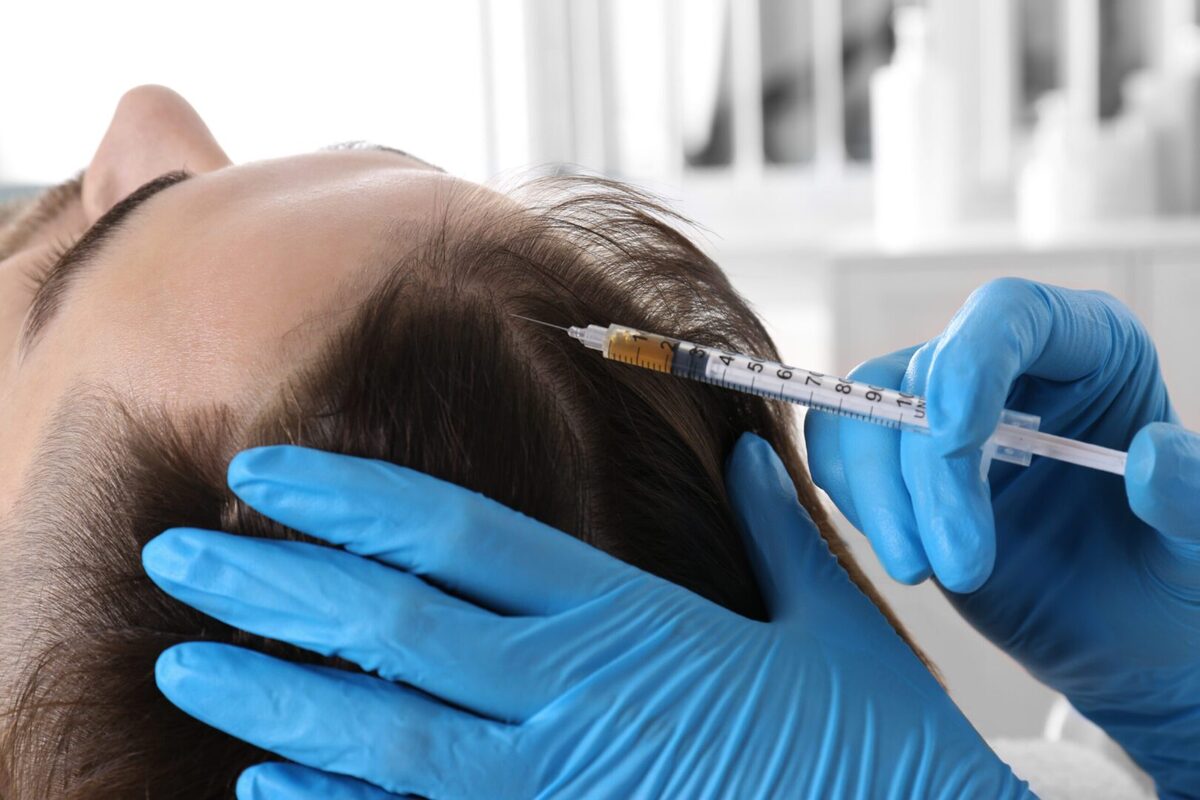
Injection sessions are typically short and minimally invasive. Mild discomfort may be felt at the beginning of the procedure, but the treatment is generally well tolerated. Physicians use ultra-fine needles to inject precise amounts of minoxidil into targeted areas based on the distribution of hair thinning or scalp gaps. In many cases, minoxidil injections are combined with PRP (Platelet-Rich Plasma) or mesotherapy to enhance and accelerate results.
Consistency is essential. Minoxidil requires time to exert its effects, and treatment should not be discontinued abruptly. Visible improvement usually begins within 2–3 months from the start of therapy.
Topical Minoxidil Injections vs Systemic Minoxidil Injections
One of the most common misconceptions is confusing local (intradermal) minoxidil injections with systemic minoxidil injections.
Local (Intradermal) Minoxidil Injections
This is the form used in medical aesthetic and dermatology clinics. Minoxidil is injected into the mid-dermal layer of the scalp, directly surrounding the hair follicles. The formulation contains a low, controlled concentration designed to stimulate local blood circulation and follicular activity without causing systemic effects.
Local injections typically produce faster and more uniform results than topical products. However, patience and adherence to the treatment plan are critical. Proper post-treatment scalp care also plays an important role in achieving optimal outcomes.
Systemic Minoxidil Injections
Systemic minoxidil is not used in aesthetic practice. Originally developed as an antihypertensive medication, systemic administration (intravenous or subcutaneous) can cause significant side effects such as low blood pressure, palpitations, and peripheral edema. For this reason, it is not indicated for cosmetic hair treatments.
The key distinction lies in safety and targeting: local injections act directly on hair follicles, while systemic injections affect the entire body and carry medical risks.
Minoxidil Injections vs Traditional Minoxidil Sprays and Solutions
The difference extends beyond the method of application—it significantly affects treatment efficacy and outcomes.
Topical minoxidil relies on skin absorption, which varies among individuals due to differences in scalp barrier function, application technique, and enzymatic activity. As a result, a substantial portion of the active ingredient may never reach the hair follicles.
With injections, minoxidil is delivered directly into the dermal layer surrounding the follicles, ensuring a higher and more precise concentration at the target site. This targeted delivery leads to faster visible improvement, often within 12 weeks, with more pronounced density and scalp coverage by the fourth month.
Additionally, injections reduce the risk of scalp irritation or shedding reactions sometimes associated with topical products, making them an advanced option for patients with poor response to conventional treatments or more advanced hair loss.
Results and Number of Sessions
Clinical observations of intradermal minoxidil injections show that early objective signs of response typically appear within 12–13 weeks. These include an increase in the proportion of hairs in the growth phase and improved hair shaft thickness. More noticeable improvements in scalp coverage and density are often observed by the end of the fourth month.
Most physicians recommend 3–6 sessions, spaced 2–4 weeks apart. After completing the initial treatment course, maintenance sessions are usually advised every 3–6 months to preserve results.
In cases of active or advanced hair loss, maintenance sessions may be scheduled more frequently—every 2–3 months during the first year—then adjusted based on clinical response.
Pre-Treatment Guidelines for Minoxidil Injections
Proper preparation enhances treatment efficacy and minimizes side effects. Recommended pre-session instructions include:
- Gently wash the hair and scalp on the morning of the session or the night before using a silicone-free shampoo. Ensure the scalp is clean and completely dry.
- Discontinue irritating products (retinol, acids, strong serums) 3–5 days before treatment.
- Stop topical minoxidil at least 24 hours before the session.
- Inform the physician of all medications and supplements, especially blood thinners or aspirin.
- Avoid hair dye, keratin treatments, or chemical procedures before the session.
- Maintain adequate hydration the day before treatment to support circulation.
Post-Treatment Care After Minoxidil Injections
Post-treatment care is essential for optimal results:
- Avoid washing the hair for at least 24 hours.
- Avoid direct sun exposure and excessive heat for 48 hours.
- Refrain from intense exercise, saunas, or heavy sweating for two days.
- Do not apply styling products or chemical treatments for 3–5 days.
- Avoid touching or scratching the scalp, even if mild itching occurs.
- Follow the recommended schedule for subsequent sessions to ensure continuity of results.
Who Is a Suitable Candidate for Minoxidil Injections?
Minoxidil injections are recommended for patients experiencing hair thinning or hair loss, including:
- Men and women with androgenetic alopecia, especially in early to moderate stages.
- Patients with poor response to topical minoxidil due to absorption issues (except in cases of SULT1A1 enzyme inactivity).
- Individuals with diffuse hair shedding caused by stress, hormonal changes, or nutritional deficiencies.
- Postpartum hair loss and hair thinning associated with menopause.
- Patients seeking to enhance results from PRP or mesotherapy.
- Individuals who have undergone hair transplantation and wish to strengthen graft survival and stimulate regrowth.
Possible Side Effects of Minoxidil Injections
When performed under medical supervision, minoxidil injections are generally safe. Potential side effects are usually mild and localized, including:
- Mild pain or stinging at injection sites
- Temporary redness or swelling
- Superficial bruising that resolves within a few days
Common Mistakes and Important Warnings
To ensure safety and optimal outcomes, patients should avoid the following:
- Incorrect injection depth or dosage, which requires medical expertise.
- Abrupt discontinuation of treatment, which may lead to renewed hair shedding.
- Irregular session intervals that disrupt treatment efficacy.
- At-home use or treatment by non-qualified personnel.
- Immediate sun exposure or hair washing after the session.
- Mixing minoxidil with other substances without medical consultation.
- Ignoring post-treatment care instructions.