Ear and nose piercings are a popular aesthetic choice at different stages of life. However, with changing preferences, social reasons, or personal considerations, many individuals later wish to reduce the size of a piercing opening or close it completely. With the advancement of medical aesthetic technologies, laser treatment has emerged as a non-surgical option that may help minimize or close piercing holes in selected cases, without the need for traditional surgical intervention.
Why Do Ear and Nose Piercing Holes Stay Open?
The ability of an ear or nose piercing hole to close naturally varies from person to person and depends on how the skin heals inside the piercing channel. When a piercing is created, a tunnel lined with skin cells forms. Over time, this tunnel may become stable and behave like normal skin tissue, preventing the opening from closing even after jewelry has been removed for long periods.
Several factors influence whether a piercing hole remains open, including the age of the piercing, the diameter of the jewelry used, and the exact location of the piercing. Older or wider piercings are generally less likely to close on their own compared to newer or smaller ones. Individual healing patterns and genetic factors also play a role, explaining why some piercings close easily while others remain visible for years.
The Role of Laser in Reducing or Closing Piercing Openings
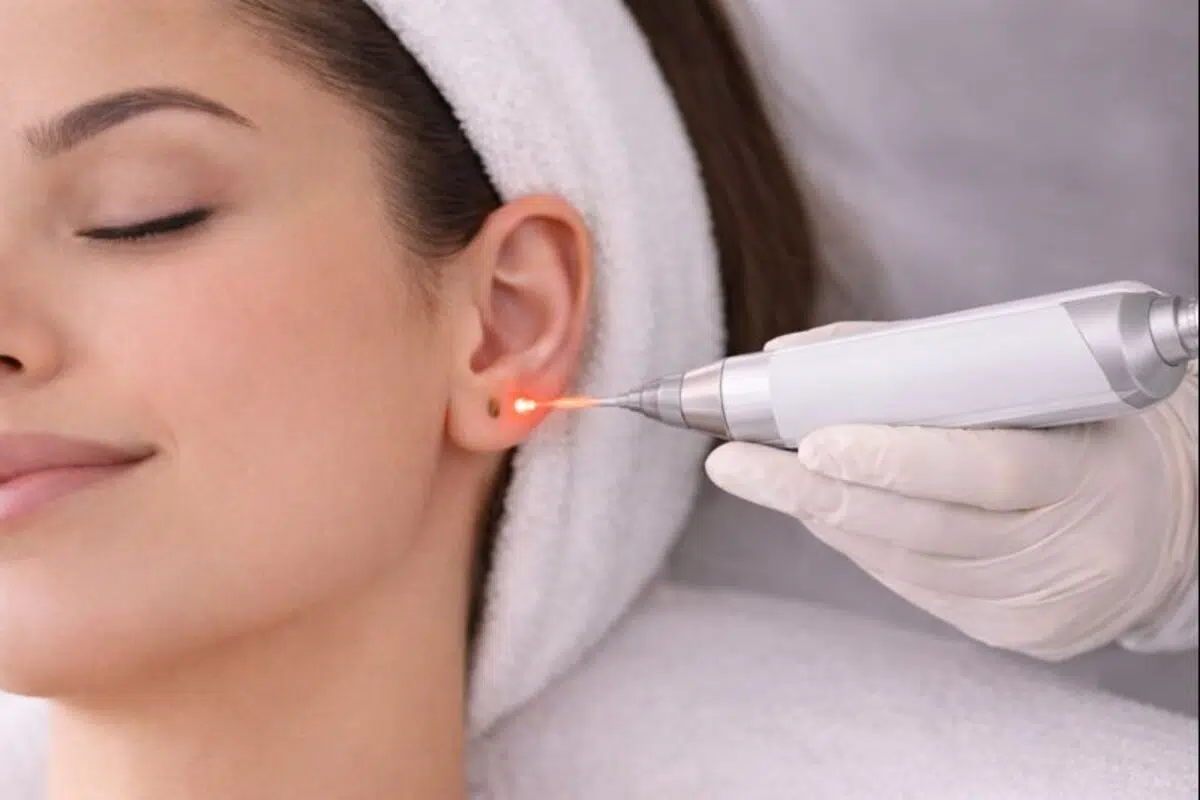
Laser treatment works by reactivating the healing process within the piercing channel in a controlled and precise manner. The laser delivers targeted thermal energy to the tissue lining the opening, helping to reduce its thickness and stimulate gradual tissue contraction.
In certain cases, this process can lead to noticeable reduction in the size of the piercing hole or partial to near-complete closure. Response to laser treatment varies depending on factors such as piercing age, size, skin type, and location. For this reason, laser is considered a suitable option for selected cases rather than a universal solution for all piercings.
When Is Laser a Suitable Option for Closing Piercing Holes?
Laser treatment tends to be more effective when one or more of the following conditions are present:
- Small to medium-sized piercing openings
- Relatively recent piercings with less established tissue lining
- No severe stretching or tearing of the surrounding skin
- Desire to reduce or close the opening without surgery
- Healthy surrounding skin without chronic irritation or active skin conditions
When Laser May Not Be Sufficient
Laser treatment may not be the best option in the following situations:
- Very wide piercing openings, especially those expanded using large-gauge jewelry
- Piercings with visible tearing or significant skin stretching
- Desire for immediate and complete closure in a single session
- Poor skin quality around the piercing or chronic inflammation
CO₂ Laser for Ear and Nose Piercing Closure
Carbon dioxide (CO₂) laser technology is widely used in precise skin procedures due to its ability to remodel tissue and stimulate controlled healing. When used for reducing or closing piercing openings, CO₂ laser targets the inner lining of the piercing channel, encouraging tissue contraction and gradual healing.
Results depend on the laser technology used, as advanced systems provide greater precision and energy control. Choosing the appropriate laser device plays an important role in achieving optimal outcomes.
CO₂ UltraPulse Alpha Laser: Advanced Precision and Control
The CO₂ UltraPulse Alpha laser is one of the most advanced CO₂ laser technologies available. It delivers ultra-short, high-energy pulses that limit heat spread to surrounding tissues while maintaining strong effects within the piercing channel.
This level of precision allows accurate tissue remodeling and improves the chances of gradual closure, especially in cases that require a stronger yet controlled treatment approach.
Key Advantages of CO₂ UltraPulse Alpha Laser
- High precision with controlled depth: Energy is delivered directly to the tissue lining the piercing opening, stimulating natural healing and collagen remodeling.
- Suitable for delicate areas: Its accuracy makes it safe for sensitive areas such as the earlobe and nose.
- Customized treatment: Laser settings can be adjusted based on piercing size, age, and skin type, allowing a personalized treatment plan.
Ideal Use Cases
- When stronger and more precise laser effect is required
- When simpler techniques have not provided sufficient improvement
- When aiming for more stable results with reduced downtime
CO₂ Laser FX as an Alternative Option
CO₂ Laser FX is another effective option for reducing or closing ear and nose piercing holes, particularly when gradual healing is preferred. While it uses the same CO₂ laser principle, it delivers energy with a different pulse pattern and lower intensity compared to UltraPulse Alpha.
Laser FX creates controlled thermal stimulation within the piercing channel, helping reduce tissue thickness and encourage gradual contraction. It is often suitable for smaller or relatively newer piercings where aggressive treatment is not required.
Combining Laser and Minor Surgical Repair
In some cases, laser treatment alone may not achieve the desired level of closure, especially with wide or long-standing piercing openings. In such situations, combining laser treatment with minor surgical repair can provide more effective results.
Surgical repair is used to directly close or reduce the opening, while laser treatment is applied afterward to enhance healing, stimulate collagen production, and improve the appearance of the treated area. Laser also plays a valuable role in refining the appearance of any resulting scar by smoothing the skin and improving color uniformity.
This combined approach allows the physician to address both the piercing opening and the aesthetic outcome simultaneously, offering a more natural-looking result with improved healing and long-term satisfaction.